




Scarlet RF Microneedling in Hoover, AL: What to Expect Before, During, and After
RF microneedling can be an option for people concerned about uneven texture, fine lines, acne scars, or mild skin laxity. At Ross Bridge Medical Center in Hoover, Alabama, our RF microneedling service features Scarlet SRF. The first step is not choosing a treatment package; it is determining whether the procedure fits your skin, medical history, and goals.
What is Scarlet RF microneedling?
Scarlet SRF combines very small needle electrodes with radiofrequency energy delivered into targeted skin tissue. Controlled treatment can stimulate skin remodeling over time. Patients may seek improvement in texture, firmness, and the appearance of certain wrinkles or scars, but responses vary and results are not guaranteed. Scarlet SRF is FDA-cleared for dermatologic and general surgical procedures involving electrocoagulation and hemostasis; cosmetic-result claims should not be confused with that regulatory indication.
Before treatment: what your consultation should cover
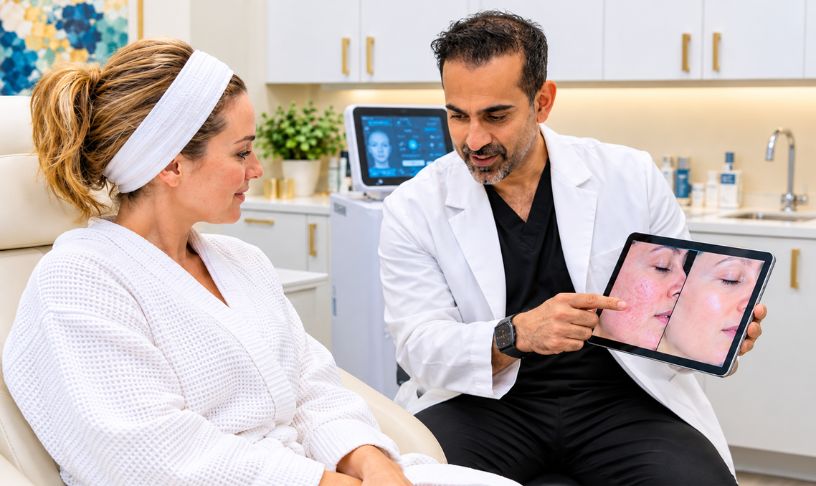
Your clinician should examine the proposed treatment area and discuss prior procedures, pigment changes, scarring tendencies, healing problems, allergies, and realistic benefits. Mention pregnancy, an implanted electronic device, recent tanning or sunburn, active skin infections or breakouts, a history of cold sores, and any medicines or products that may affect the treatment plan. An assessment is especially important when acne scarring, pigmentation, or facial volume loss are major concerns; RF microneedling may not address every cause.
Preparation is individualized. Your provider may advise you to avoid irritating skincare ingredients or excess sun exposure for a period beforehand. Do not stop a prescribed medication without medical guidance. Ask whether numbing cream will be used, how long the visit will take, and whether you should plan around an upcoming event.
During treatment: what will it feel like?
After cleansing the skin, your provider may apply a topical anesthetic. A handheld applicator places tiny needles into the skin and delivers radiofrequency energy according to the selected settings. Patients may notice pressure, warmth, prickling, or brief discomfort; topical numbing can reduce but not eliminate sensation. The number of passes, treatment depth, and energy settings vary by treatment area and individual response. Tell your provider immediately if discomfort is severe or unusual.
After treatment: what is normal?
Redness, warmth, mild swelling, tightness, tenderness, dryness, and pinpoint marks can occur. Some patients have bruising or peeling. These reactions often improve over several days, although recovery is not identical for everyone. Stronger treatment settings or sensitive skin can mean more noticeable downtime.
Keep skincare gentle and follow the instructions you receive from the treating clinician. Avoid picking at the skin. Ask when to restart retinoids, exfoliating acids, makeup, sunscreen, exercise, swimming, and heat exposure; these recommendations depend on the treated skin and device settings. Sun protection matters throughout healing.

Know the uncommon but serious risks
RF microneedling is a medical procedure with potential complications. The FDA has warned about reports of burns, scarring, fat loss, disfigurement, and nerve damage associated with some RF microneedling uses. Seek prompt medical assessment for worsening or severe pain, blistering, spreading redness, pus, unexpected changes in sensation, or other concerning symptoms. Choosing an appropriately trained clinician and following aftercare instructions matter.
When will results appear, and how many sessions are needed?
Visible improvement may develop gradually over weeks to months as the skin remodels. More than one session may be discussed, depending on skin concerns and response. A good treatment plan should identify what can reasonably improve, which changes may be limited, and how progress will be evaluated. No specific degree of tightening or scar improvement can be promised.
Why choose RBMC for a Scarlet RF consultation?
Ross Bridge Medical Center combines aesthetic services with broader medical care. A consultation gives you an opportunity to review your health history, discuss risks and alternatives, and decide whether Scarlet SRF is a suitable treatment rather than relying on a one-size-fits-all cosmetic package. Our goal is informed care and natural-looking results that fit your preferences.
To learn more or request an appointment, visit https://rossbridgemedicalcenter.com/aesthetic-services/rf-microneedling/ or call (205) 494-7677. Ross Bridge Medical Center is located at 3635 Market Street, Hoover, AL 35226.
Frequently asked questions:
Can I wear makeup the next day?
Possibly, but only when your treating clinician confirms that your skin is ready. Some patients should wait longer than 24 hours.
Is RF microneedling appropriate for every skin tone?
Not automatically. Many skin tones may be candidates, but suitability depends on individual risk factors, the device, settings, and the practitioner’s assessment.
Can I return to work the next day?
Many people resume ordinary routines relatively quickly, but visible redness or swelling can persist. Avoid scheduling treatment immediately before an important event.
Is Scarlet SRF the same as regular microneedling?
No. Both create controlled skin punctures, but Scarlet SRF also delivers radiofrequency energy through its needle electrodes.