




How Long Does TMS Therapy Take?
If you are considering TMS for depression, one of your first questions may be: How much time will treatment take out of my day?
Transcranial magnetic stimulation, or TMS, is an outpatient treatment performed while you are awake. It does not require anesthesia or sedation, and patients can generally return to their normal activities after treatment.
Unlike a medication that you take at home, TMS is delivered as a series of treatments. A traditional treatment course commonly involves sessions five days per week for approximately four to six weeks, although your individual treatment plan may vary.
At Ross Bridge Medical Center, we use NeuroStar Advanced Therapy as part of our comprehensive approach to treating depression.
What Is TMS?
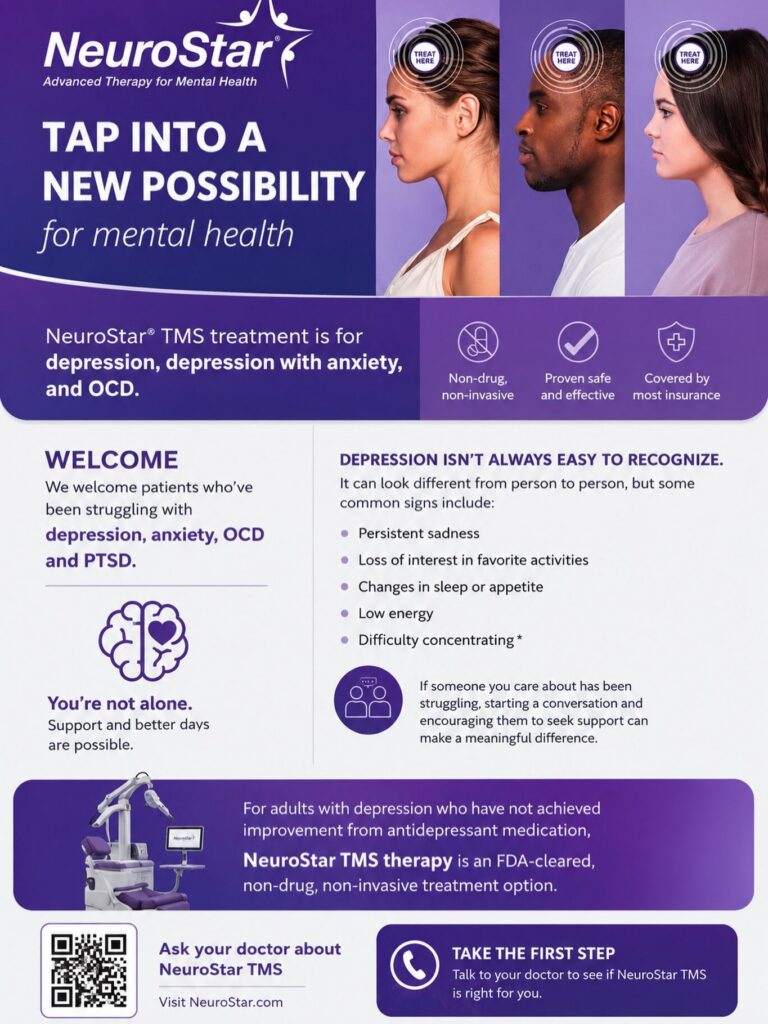
TMS is a noninvasive treatment that uses magnetic pulses to stimulate targeted areas of the brain involved in mood regulation.
During treatment, a magnetic coil is positioned against the scalp. You remain awake and alert while the device delivers repeated magnetic pulses. Patients commonly hear clicking and may feel a tapping sensation during stimulation.
That makes TMS very different from many procedures patients may imagine when they first hear the term “brain stimulation.”
How Long Is Each TMS Treatment?
Treatment time depends on the specific TMS protocol prescribed for you. Your initial appointment and mapping take longer because your treatment team needs to determine the appropriate treatment location and stimulation settings.
After mapping is completed, subsequent treatments become a much more predictable part of your daily routine. Many patients are able to schedule treatment around work, school and family responsibilities and return to their normal activities afterward.
What Happens Before TMS Treatment Begins?
TMS is not simply a procedure you schedule without an evaluation. At Ross Bridge Medical Center(opens in new tab), treatment begins with an assessment to determine whether TMS is appropriate for you.
- Your depression symptoms and diagnosis
- Previous antidepressant medications
- Previous psychotherapy or other treatments
- Medical and psychiatric history
- Current medications
- Safety considerations for TMS
- Insurance requirements and authorization
If TMS is appropriate, the next steps include treatment mapping and establishing your individualized stimulation settings.
What Does a Typical TMS Treatment Course Look Like?
Week 1: Getting Started
Your first week establishes your treatment routine. Initial mapping determines where treatment will be delivered and helps establish the appropriate stimulation parameters. After that, you begin coming in regularly for treatment.
Weeks 2-3: Building a Routine
By this point, coming to Ross Bridge Medical Center for TMS often becomes part of your normal schedule. Some patients begin noticing changes during the first several weeks. Others do not notice meaningful improvement until later.
That is why we monitor symptoms throughout treatment rather than judging success based on a particular day or week.
Weeks 4-6: Monitoring Your Progress
As treatment continues, we evaluate how you are responding. Completing a certain number of treatments is not the only goal. How you actually feel matters.
Your symptoms, treatment response and overall well-being help your psychiatric team determine what comes next.
| Treatment Stage | What to Expect | Typical Timing |
|---|---|---|
| Initial Evaluation | Psychiatric assessment and treatment planning | Individualized |
| Mapping / First Treatment | Determine location and stimulation settings | Longer visit |
| Routine Treatments | Magnetic stimulation and monitoring | Protocol-dependent |
| Full Course | Repeated outpatient treatments | Often 4–6 weeks |
| Follow-Up | Review response and ongoing care plan | Individualized |
When Will I Notice Results From TMS?
This is one of the most common questions we hear. There is not a universal answer. Some patients begin noticing improvement after several weeks, while others may respond later in their treatment course.
Instead of focusing only on whether you “feel different” after a few treatments, we follow your symptoms and progress throughout the course.
What Happens After TMS?
Mental health treatment does not necessarily end when your initial TMS course is completed. Your psychiatric provider evaluates your response and helps determine what ongoing care is appropriate.
Depending on your individual situation, that may include medication management, psychotherapy, continued symptom monitoring or additional TMS treatment.
Psychiatry and Primary Care Under One Roof
Depression does not exist separately from the rest of your health. Sleep problems, thyroid disorders, medication side effects, hormonal issues, vitamin deficiencies and other medical conditions can sometimes contribute to or complicate psychiatric symptoms.
That is one reason Ross Bridge Medical Center combines primary care and psychiatric care in the same practice. Our psychiatric providers can work alongside your primary-care team rather than treating mental and physical health as completely separate problems.
For patients undergoing TMS, this means we can continue looking at the whole patient, not simply administer a treatment and send you somewhere else for the rest of your care.
Does Insurance Cover TMS?
Many commercial insurance plans provide coverage for TMS for eligible patients with depression, although individual requirements vary. Some insurance companies require documentation showing that previous depression treatments have not provided adequate improvement.
Why NeuroStar TMS at Ross Bridge Medical Center?
For us, TMS is not a stand-alone service. It is part of a broader mental-health program that can combine psychiatric evaluation, medication management, primary care, TMS and ongoing follow-up.
We use NeuroStar Advanced Therapy and monitor patients throughout their treatment course. Most importantly, you continue to have a medical and psychiatric team available as your treatment needs change.
Could TMS Be the Next Step for Your Depression?
If you have tried antidepressant medications or therapy and still do not feel like yourself, repeating the same approach is not your only option.
TMS may provide another treatment option for appropriate patients with depression. At Ross Bridge Medical Center, our psychiatric team can review your symptoms and previous treatments, determine whether TMS may be appropriate, and help you understand your insurance coverage.
SCHEDULE A TMS CONSULTATION
SCHEDULE A TMS CONSULTATION
(opens in new tab)
Frequently Asked Question:
Can I drive after TMS?
TMS is generally performed without anesthesia or sedation, so patients can typically resume normal activities afterward. Your clinician can provide advice based on your individual circumstances.
Is TMS painful?
You may feel tapping or scalp discomfort during stimulation. Headaches or scalp discomfort can occur, particularly early in treatment. Tell your treatment team if discomfort is significant or persistent.
How many TMS treatments will I need?
A traditional treatment course may involve approximately 20-30 treatments over four to six weeks, although the exact number depends on your treatment protocol and individualized plan.
Does TMS work immediately?
Not necessarily. Some patients notice improvement within several weeks, while others respond later. Your treatment team monitors your progress throughout treatment.