




Which Facial Filler Is Right for You?
Patients often arrive asking for a filler they have seen online. But the right treatment depends on facial anatomy, where volume has changed, the area being treated, and the result you want – not simply the most familiar product name.
At Ross Bridge Medical Center, the goal is a refreshed, balanced and natural-looking result. Different injectables behave differently, which is why the consultation and treatment plan matter as much as the product itself.
What Are Dermal Fillers?
Dermal fillers are injectable materials used to restore or add volume, soften certain facial lines and folds, or enhance facial contours. Different products have different ingredients, properties, approved uses and risks, so they are not interchangeable.
The FDA regulates dermal fillers as medical devices and approves individual products for specific indications. Patients should understand the exact product being recommended, the intended treatment area, expected benefits, alternatives and potential risks.
Hyaluronic Acid Fillers
Hyaluronic acid (HA) is naturally present in the body and helps retain moisture. HA fillers can add volume and may be used in areas such as the lips, cheeks, chin and certain facial folds, depending on the specific product. Examples include products within the Juvéderm and Restylane families.
The advantage of having multiple HA options is that an experienced injector can select a product based on the location and desired effect instead of using the same filler everywhere.
Collagen-Stimulating / Biostimulatory Options
Not every injectable works primarily by adding immediate HA volume. Sculptra contains poly-L-lactic acid (PLLA), while Radiesse contains calcium hydroxylapatite (CaHA). These products behave differently from traditional HA fillers and may be considered for selected patients when the goal involves facial volume, contour or collagen stimulation over time.
Different Tools for Different Goals

RBMC offers multiple aesthetic treatment categories. A consultation helps determine whether filler, a neuromodulator, a collagen-stimulating treatment, or another approach best matches the patient’s goals.
| Treatment type | General approach | Common goals |
|---|---|---|
| HA filler | Adds or restores volume | Lips, cheeks, folds, contour |
| PLLA / CaHA | Biostimulatory / structural approach | Volume loss, contour, collagen support |
| PRP-based option | Patient-derived blood product processed for aesthetic use |
Selected volume / skin-quality goals |
| Neuromodulator | Temporarily reduces targeted muscle activity | Dynamic expression lines |
What About PRP-Based Treatments?
Ross Bridge Medical Center also offers PRP-based aesthetic options. These are best discussed separately from conventional HA, CaHA and PLLA fillers because the material and preparation are different. During consultation, patients should be told exactly what is being used and why it is being considered for their goals.
How Do We Decide Which Filler to Use?
We start with the patient, not the syringe. Facial anatomy, proportions, areas of volume loss, skin characteristics, facial movement, previous treatments, treatment area and the desired degree of change all influence the recommendation.
- Facial anatomy and proportions
- Areas of volume loss and facial movement
- Previous injectable treatments
- The treatment area and desired degree of correction
- The patient’s priorities and tolerance for downtime
- Benefits, alternatives and risks of treating that area
Someone seeking subtle lip enhancement may need a very different plan from someone trying to restore age-related cheek volume. Sometimes the right answer is less filler – or no filler at all.
Filler vs. Botox: What Is the Difference?
Fillers and neuromodulators do different jobs. Fillers generally restore or add volume or modify contour. Botulinum toxin products such as Botox temporarily reduce activity in selected muscles. A patient concerned about expression-related forehead lines is therefore discussing a different treatment category from someone concerned about loss of cheek volume.
At RBMC, injectable options include Botox and other neuromodulators as well as facial fillers. Some patients may benefit from a combination; others may achieve a better result with a more limited treatment plan.
Natural Results Matter
One of the most common concerns we hear is: “I don’t want to look overdone.” Good aesthetic medicine is not necessarily about changing the way someone looks. Often, it is about restoring balance while maintaining the features that make that person look like themselves.
More filler is not automatically better. We favor thoughtful, anatomy-based treatment planning and realistic expectations.
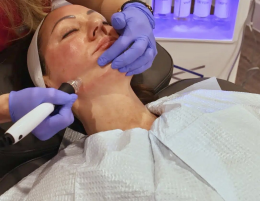
Aesthetic treatments are medical procedures and should be planned with attention to anatomy, product selection and safety.
Fillers Are Medical Procedures
Temporary swelling, bruising, tenderness, redness and discomfort can occur after filler injections. Serious complications are uncommon but can occur. Accidental injection into a blood vessel can cause tissue injury and, in rare cases, visual complications or stroke.
Patients should disclose relevant medical conditions, allergies, medications, supplements and previous cosmetic treatments. Concerning symptoms after treatment – particularly significant or unusual pain, vision changes, stroke-like symptoms or abnormal skin coloration near the injection area – require urgent medical evaluation.
Questions We Encourage Patients to Ask
- What exactly are you injecting?
- Why did you choose this product for this particular area?
- Is the proposed use FDA-approved for this product?
- What result should I realistically expect?
- What are the important risks and alternatives?
- What happens if I have a complication?
A good aesthetic consultation should make you more informed – not pressured to receive treatment.
Facial Fillers at Ross Bridge Medical Center

At Ross Bridge Medical Center, aesthetics is part of a broader medical practice. We provide individualized consultations for facial rejuvenation and injectable treatments, including selected hyaluronic acid fillers, biostimulatory options, PRP-based treatments and neuromodulators.
Our approach is straightforward: understand what bothers you, evaluate your anatomy, explain the options and develop a treatment plan that still looks like you.
Considering Facial Fillers in Hoover, Alabama?
Schedule an aesthetic consultation at Ross Bridge Medical Center to discuss what you would like to improve and whether filler – or another treatment – is appropriate for you.
Frequently Asked Questions:
How long do fillers last?
Duration varies by product, treatment area and individual factors. Many fillers are temporary because the body gradually absorbs their materials.
Can facial fillers be reversed?
Some hyaluronic-acid fillers can be treated with hyaluronidase when clinically appropriate. Other materials cannot simply be “dissolved,” which is another reason patients should know exactly what product they are receiving.
Can Botox and filler be used in the same treatment plan?
Potentially. They address different aspects of facial anatomy and aging, so a clinician may recommend one or both depending on the patient’s goals.
How do I know which filler I need?
You do not necessarily need to know before your appointment. The treatment should follow the assessment and aesthetic goal rather than choosing a product first.